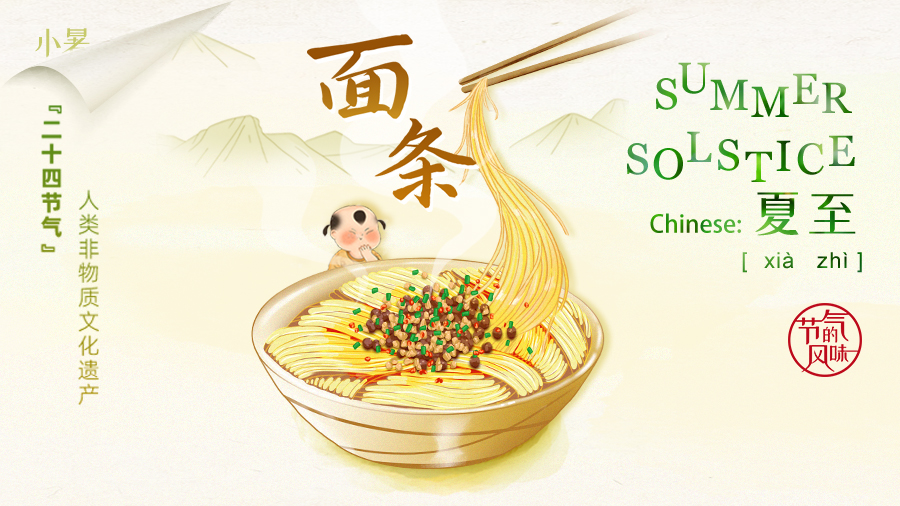
Summer Solstice
Overview
The Summer Solstice, marks a significant astronomical and cultural event observed around the world, particularly in the Northern Hemisphere. Occurring when the sun is positioned directly over the Tropic of Cancer, it signifies the longest day of the year in terms of daylight. Despite the extensive daylight, the peak temperatures typically follow several weeks later. The Summer Solstice has been celebrated and observed in various cultures, often accompanied by unique traditions and customs that reflect its historical and agricultural significance.
Cultural Significance and Traditions
As early as the Han Dynasty (206 BC-220 AD), it was celebrated with various festivities. The solar term Summer Solstice is part of the traditional 24 Solar Terms on the Chinese lunar calendar, which were originally devised to guide agricultural activities. Even today, these solar terms play a role in guiding various aspects of life, including dietary customs, cultural ceremonies, and health practices.
The Summer Solstice is crucial for agricultural planning in China, as it signals the beginning of "Fu," the hottest period of the year, occurring 20-29 days after the solstice. This period requires special attention to sun protection and dietary adjustments to mitigate the effects of heat. The solar terms, including the Summer Solstice, serve as an ancient guide for agricultural cycles, influencing planting and harvesting activities.
Longest Daylight
On the Summer Solstice, locations in the Northern Hemisphere experience the longest period of daylight throughout the year.
Seasonal Celebrations
Throughout China, the Summer Solstice has been celebrated with practices such as exchanging colored fans and sachets, which serve practical purposes like cooling down and repelling insects. In some regions, such as Mojiang in Yunnan province, the event is marked by the observation of the sun's direct position over the Tropic of Cancer, leading to phenomena like "upright pole with no shadows."
Culinary Traditions
Food plays a significant role during the Summer Solstice in China. For instance, people in Shandong province traditionally eat noodles, while others may prepare cold dishes to coincide with the seasonal change. The Summer Solstice is also linked with local events such as dragon boat races in Zhejiang province.
Cultural Expressions
The Summer Solstice has inspired idioms and stories in Chinese culture. One such idiom is "杯弓蛇影" (bēi gōng shé yǐng), which conveys the idea of self-inflicted fear based on mistaken perceptions, originating from a tale associated with the Summer Solstice.
Modern Celebrations and Cultural Activities
Despite its agricultural roots, the Summer Solstice continues to hold cultural relevance in modern times. In some cities, environmental advocates have suggested symbolic activities like turning off lights to save energy. The concept of the Summer Solstice has also found its way into contemporary cultural expressions, such as fashion campaigns and artistic endeavors, illustrating its enduring impact across different domains. Article reference1. 24 Solar Terms: 9 things about Winter Solstice. chinadaily.com.cn. 20232. Festive China: Summer. chinadaily.com.cn. 20233. The heat is on. chinadaily.com.cn. 20224. Video: Summer Solstice. chinaservicesinfo.com. 20225. Longest day is a turning point. chinadaily.com.cn. 2022Photo Gallery(3 pictures)CategoriesLifestyleTag24 Solar TermsRelatedLunar Calendar24 Solar TermsDance of 24 Solar TermsCatalogue1. Overview2. Cultural Significance and Traditions3. Modern Celebrations and Cultural Activities- - - []








